Your Choice of Product
Starting a gypsum board manufacturing plant is a capital-intensive but high-return venture. A complete gypsum board production line typically costs from $180,000 to $8,500,000 FOB China depending on capacity, and a plant can go from contract to production in 12–18 months. This guide walks through the seven decisions that determine whether your project succeeds — based on DCI's experience delivering lines in 20+ countries.
The first question is not "which machine" but "who will buy the boards." Gypsum board demand tracks construction activity — residential, commercial, and industrial. In markets where boards are imported, a local plant has a built-in cost advantage: no ocean freight, no import duties, faster delivery. In markets like the Middle East and Africa, where imports dominate, local production is increasingly competitive.
Two indicators to check before committing:
●Construction growth rate — is new building activity rising in your region?
●Import dependence — how much gypsum board is currently imported? High imports = replacement opportunity.
A 5 million m²/year line is a common entry point for regional markets; a 20 million m²/year line suits national-scale supply.
Your feedstock choice changes both equipment and operating cost.
Raw Material | Source | Equipment Impact | Cost Impact |
Natural gypsum | Quarried rock | Standard crusher + grinding | Baseline |
Phosphogypsum | Fertilizer industry byproduct | Additional washing + neutralization | +15–30% |
Natural gypsum is the simplest and most common starting point. FGD gypsum is cheaper per ton but requires drying and screening before calcination. Confirm the long-term supply and chemical purity (CaSO₄·2H₂O content above 80%) of your local feedstock before finalizing equipment specifications.
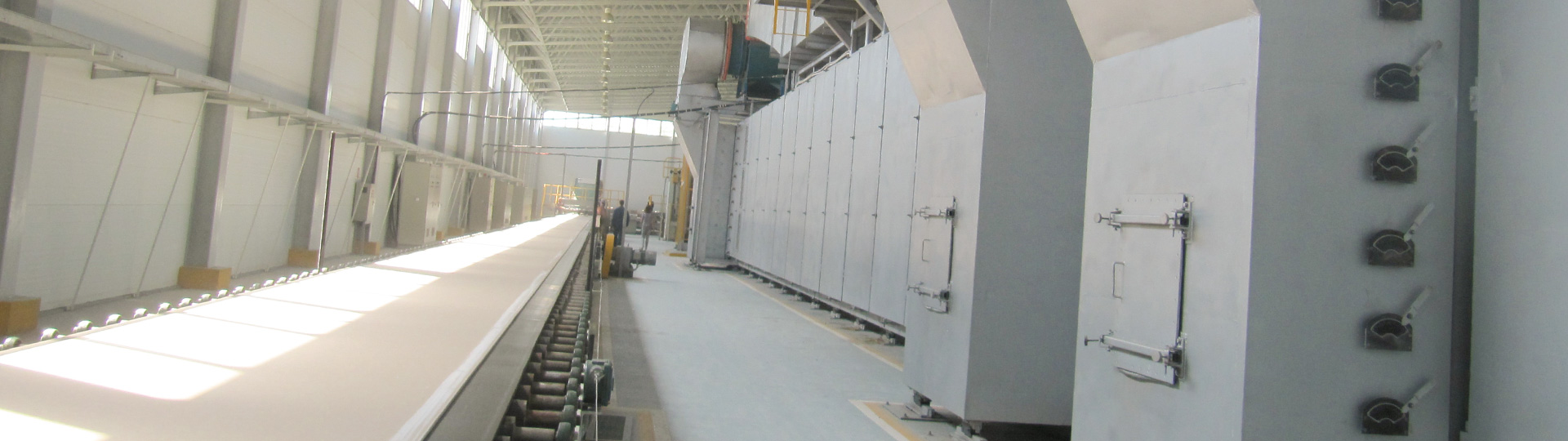
A gypsum board production line needs specific physical space. The dryer — the longest section — typically requires 40–120 meters of building length depending on capacity.
●Land area — minimum 5,000–10,000 m² for a small-to-mid line
●Building height — 6–8 meters to accommodate the dryer and material handling
●Foundation — reinforced concrete slab for the forming and drying sections
●Utilities — stable electricity, fuel supply (gas/coal/oil), and water
Your capacity decision determines everything downstream. The table below maps typical line sizes to their target markets.
Annual Capacity | Typical FOB Price (USD) | Best For |
2 million m² | $180,000 – $300,000 | Startup, niche market |
5 million m² | $400,000 – $800,000 | Regional supplier |
10 million m² | $800,000 – $1,500,000 | National player |
20 million m² | $2,000,000 – $4,000,000 | Large-scale manufacturer |
50 million m² | $5,000,000 – $8,500,000 | Multi-country supply |
A complete line includes: raw material storage, mixer, forming machine, dryer, cutting system, and automatic stacking/packing. Full automation with Siemens PLC control reduces labor and ensures consistent board thickness.
Understanding the full cost structure prevents budget surprises.
Cost Component | Share of Total |
Equipment (FOB) | 50–60% |
Freight & customs | 10–15% |
Building & foundation | 15–20% |
Installation & commissioning | 5–10% |
Working capital (raw material, labor) | 10–15% |
DCI's turnkey scope covers engineering design, manufacturing, shipping, on-site installation, commissioning, and operator training — so the equipment, installation, and commissioning costs are bundled into one quotation.
Gypsum board production involves thermal processing (drying/calcination), which requires environmental approval in most countries. Prepare for:
●Emissions permit — for the hot air dryer and fuel combustion
●Building permit — for the factory structure
●Product certification — boards must meet the local equivalent of GB/T 9775-2008
DCI's drying system uses a direct-combustion hot air stove with nearly 100% gas efficiency and dust collection, which supports compliance in emission-sensitive markets.
A realistic schedule, assuming site readiness:
Phase | Duration |
Design & engineering | 1–2 months |
Manufacturing | 3–5 months |
Shipping | 1–2 months |
Installation & commissioning | 4–6 months |
Total | 9–15 months |
DCI engineers remain on-site until the line reaches target output and the local team operates independently — a key factor in avoiding the startup delays that plague new plants.
Planning a gypsum board manufacturing plant? Send us your target capacity, raw material type, and fuel preference. We'll respond within 24 hours with a tailored proposal and a reference to a comparable project already in operation.
Hengshui Decheng Machinery & Equipment Co., Ltd. (DCI) | Email: dci@chinagypsummachine.com | WhatsApp: +86 13930110827 / +86 18203235588 | www.dcimachine.com
Processing Demand Survey
x