Your Choice of Product
Gypsum board (drywall) is a standard building material worldwide, and Africa’s demand is rising rapidly. Many investors in Zimbabwe, Zambia, and Mozambique are looking for a reliable Gypsum Board Production Line Supplier China to establish local manufacturing capacity. Chinese machinery manufacturers offer competitive pricing, integrated automation, and flexible capacity options. However, not all suppliers deliver the same quality of engineering or after-sales support. This article provides a structured approach to evaluating suppliers, understanding key technical specifications, and planning installation – with a focus on practical insights from Hengshui Decheng Machinery & Equipment Co.,Ltd., a supplier with experience in African markets.
A gypsum board production line converts gypsum powder, water, additives, and paper liners into finished boards of standard sizes (e.g., 1200×2400 mm, 1220×2440 mm, thickness 9–15 mm). The main sections include:
| Section | Main Equipment | Function |
|---|---|---|
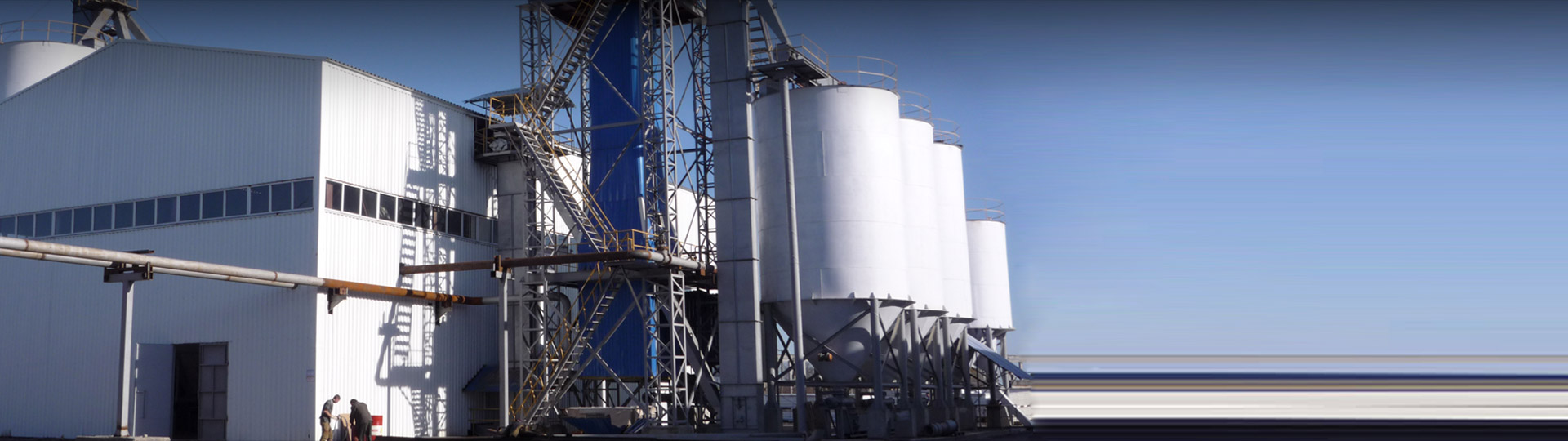
| Raw material preparation | Silo, screw conveyor, dosing system | Store and measure gypsum powder, starch, retarder, water |
| Forming | Wet mixer, forming table, lower/upper paper rollers | Mix slurry, spread between paper liners |
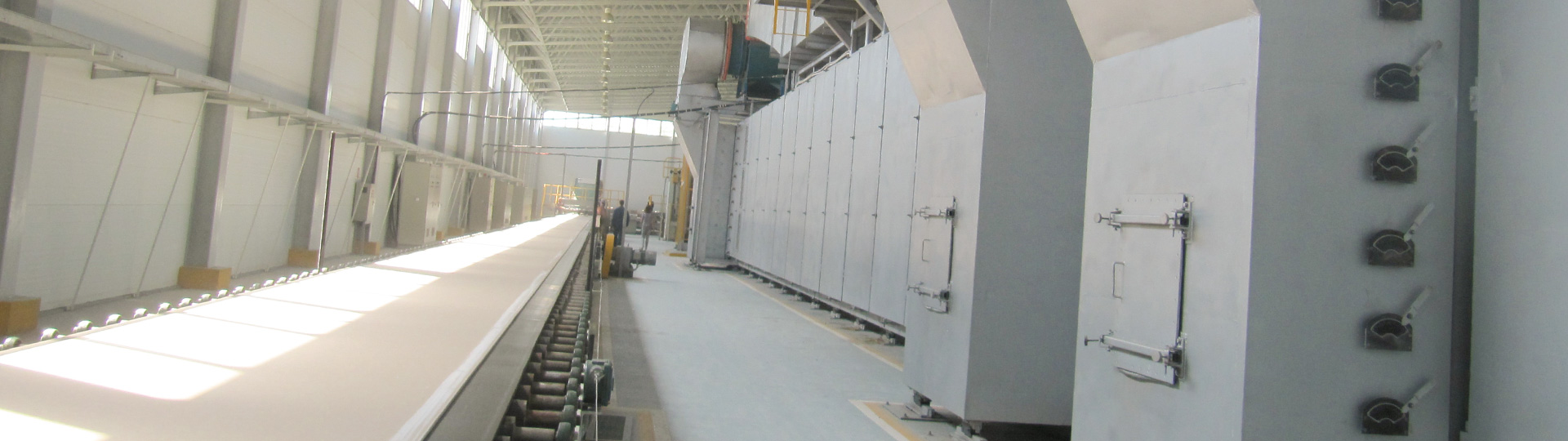
| Setting | Setting conveyor (belt or roller type) | Allow board to harden (5–10 minutes) |
| Cutting | Synchronized knife, edge trimmer | Cut continuous board to length, trim edges |
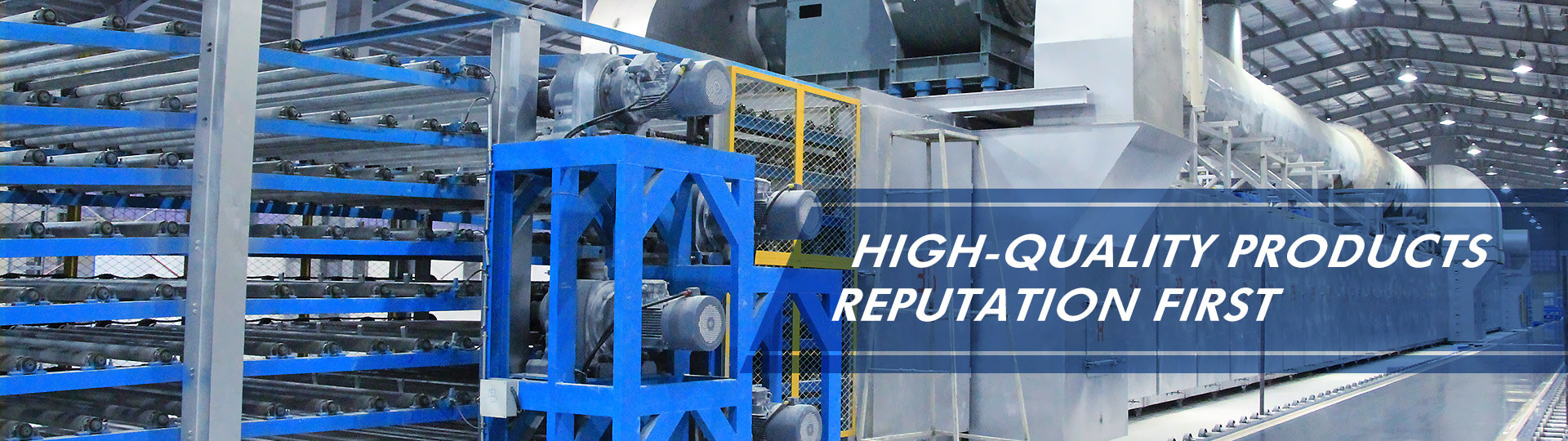
| Drying | Multi-deck roller dryer (gas, oil, or biomass fired) | Remove free water (temperature 180–220°C) |
| Finishing | Stacker, edge grinder, palletizer | Stack, square edges, prepare for packaging |
When searching for a Gypsum Board Production Line Supplier China, you should evaluate each section’s design, material quality, and automation level.
1. Forming table length and vibration
The forming table is where the gypsum slurry is spread. A longer table (≥ 3 m) allows better leveling. Some lines include a vibrating roller to improve density and reduce air bubbles.
2. Setting conveyor speed
The conveyor length determines production speed. For a 5 m/min line, the setting zone should be at least 30–40 meters to allow proper hydration. Speed must be synchronized with the wet mixer’s discharge rate.
3. Dryer design
The dryer consumes most of the energy. A multi-deck roller dryer (typically 8–16 decks) uses less floor space and offers uniform airflow. Heat sources can be:
Natural gas (clean but requires supply)
Diesel (higher cost)
Biomass (available in Zimbabwe – wood waste, crop husks)
Coal (cheap but high emissions)
4. Cutting accuracy
A servo-driven synchronized cutter ensures length tolerance within ±2 mm. Edge trimming knives should be made of tool steel for long life.
| Capacity (million m²/year) | Board width (mm) | Line speed (m/min) | Total power (kW) | Dryer fuel consumption (kg coal/m²) |
|---|---|---|---|---|
| 3 – 5 | 1200 | 3 – 5 | 180 – 250 | 0.8 – 1.0 |
| 6 – 10 | 1220 | 6 – 10 | 300 – 400 | 0.7 – 0.9 |
| 10 – 15 | 1220 or 1250 | 11 – 15 | 450 – 600 | 0.6 – 0.8 |
| 15 – 20 | 1250 | 16 – 20 | 650 – 850 | 0.5 – 0.7 |
For a first-time investor in Zimbabwe, a 3–6 million m²/year line is a realistic entry point. This matches the capacity of a typical Gypsum Powder Production Line Zimbabwe of 4–6 t/h.
When contacting potential suppliers, request the following information:
Previous installation list – At least three reference projects in Africa or similar developing markets. Ask about commissioning time and issues encountered.
Material specifications – Thickness of steel used in the forming table (≥ 12 mm for wear surfaces), type of dryer rollers (seamless steel pipes), motor brands (Siemens, ABB, or equivalent – though generic motors are acceptable if properly rated).
Control system – PLC brand (e.g., Siemens, Omron, Delta). A user-friendly HMI with English interface is essential. Remote diagnostic capability is a plus.
Spare parts commitment – Supplier should provide a detailed spare parts catalog with part numbers, and maintain stock of critical items (bearings, chains, knives, sensors).
Installation and training – Does the supplier send engineers to Zimbabwe? For how many weeks? Are visas and local accommodations included? Hengshui Decheng Machinery & Equipment Co.,Ltd. typically includes 4–6 weeks of on-site installation guidance and operator training.
Proper installation of gypsum board machinery directly affects board flatness, edge quality, and dryer efficiency. Follow these steps:
Step 1 – Foundation preparation
Concrete foundations must be poured according to the supplier’s anchor bolt drawings. The forming table area requires a vibration-dampening base (e.g., rubber pads under steel plates). Level tolerance: ±1 mm over 10 meters.
Step 2 – Main frame assembly
Assemble the forming table, setting conveyor, and dryer sections in sequence. Use laser alignment tools to ensure all sections are co-linear. Misalignment causes board warping.
Step 3 – Electrical and pneumatic connections
Run cables from the main control panel to each motor, heater, and sensor. Check that all safety interlocks (emergency stops, belt misalignment switches) are wired correctly. Pneumatic lines (for knife cylinders and paper tensioners) must be free of leaks.
Step 4 – Dryer pre-commissioning
Before production, heat the dryer to operating temperature (200°C) for 24 hours to remove moisture from insulation. Check for hot spots using a thermal camera. Calibrate temperature sensors.
Step 5 – Trial run without gypsum slurry
Run the entire line at low speed (10% of design speed). Verify that the cutting knife activates at the correct length, paper rollers turn smoothly, and stacker operates without jamming.
Step 6 – Wet trial with slurry
Mix a small batch of gypsum slurry (water/plaster ratio 0.6–0.8 by weight). Start the line at 20% speed. Adjust the forming table’s edge guides to achieve consistent board width. Gradually increase speed to design value while monitoring board thickness (use an online thickness gauge if available).
| Mistake | Consequence | Solution |
|---|---|---|
| Uneven foundation | Board thickness variation | Re-level using self-leveling compound |
| Incorrect dryer airflow | Uneven drying, cracks | Adjust damper positions and fan speed |
| Paper tension too high | Paper tears during forming | Reduce tension using calibrated springs |
| Mixer discharge delayed | Slurry sets before forming | Clean mixer impeller, check retarder dosage |
Q1: Why choose a Chinese supplier over a European one?
Chinese lines typically cost 40–60% less than European equivalents, with acceptable quality for standard boards. Spare parts are cheaper and faster to ship. However, you must invest more time in supplier verification.
Q2: Can I use locally produced gypsum powder from a Gypsum Powder Production Line Zimbabwe?
Yes. In fact, this is the most cost-effective approach. Ensure that the powder’s setting time (initial set 6–8 minutes) and fineness (≤ 5% residue on 0.2 mm sieve) match the board line’s requirements. Your supplier can provide a target specification sheet.
Q3: How long does it take to install and commission a 5 million m²/year line?
Supplier manufacturing: 60–90 days
Sea freight (China to Durban/Beira): 30–40 days
Overland transport to Zimbabwe: 7–10 days
Mechanical installation: 30–45 days (with local labor supervised by supplier)
Electrical and PLC setup: 15–20 days
Trial and acceptance: 5–10 days
Total: 5–7 months from order to first saleable board.
Q4: What are the hidden costs?
Customs duties (Zimbabwe typically 5–15% on machinery)
VAT (if not exempt)
Cargo insurance (recommended 110% of CIF value)
Local crane and lifting equipment rental
Translator/interpreter if supplier’s engineers do not speak English
Water and power connection upgrades
Q5: How does Hengshui Decheng Machinery & Equipment Co.,Ltd. support customers after installation?
They provide a one-year warranty on mechanical parts (excluding wear items), remote technical support via video call, and a recommended list of local maintenance contractors. They can also supply a second set of critical spare parts with the initial order.
Modern gypsum board lines increasingly include:
SCADA systems for real-time monitoring of temperature, speed, and thickness.
Recipe management – store parameters for different board types (standard, fire-resistant, moisture-resistant).
Remote diagnostics – supplier engineers can log into the PLC (with permission) to troubleshoot.
Energy monitoring – track fuel and electricity consumption per square meter.
While these features add 15–20% to equipment cost, they reduce long-term operating costs and downtime. For a mid-sized Zimbabwean plant, a semi-automated line with manual board stacking may be sufficient. Fully automated palletizing only pays off at capacities above 10 million m²/year.
Selecting the right Gypsum Board Production Line Supplier China is a multi-step process that requires technical due diligence, site preparation, and clear contract terms. Hengshui Decheng Machinery & Equipment Co.,Ltd. offers a balanced solution: proven lines for African conditions, transparent pricing, and practical after-sales support. When combined with a local Gypsum Powder Production Line Zimbabwe, the two lines create a vertically integrated operation that reduces material costs and secures supply. By following the installation guidelines and technical insights provided in this article, investors can avoid common pitfalls and achieve stable production within months of delivery.
Processing Demand Survey
x