Your Choice of Product
Introduction
The gypsum powder manufacturing process is a sequence of engineered operations that transform raw gypsum into a finished powder suitable for construction materials, plaster products, agricultural use, and industrial applications. Each stage influences final product quality, moisture content, and chemical stability. Hengshui Decheng Machinery & Equipment Co.,Ltd provides complete gypsum powder production solutions, including material handling, calcination, grinding, and packaging systems. Understanding the detailed process helps manufacturers optimize production planning and quality control.
Gypsum powder production begins with the extraction or procurement of gypsum ore. Raw materials may include:
Natural gypsum sourced from mining operations
Flue gas desulfurization (FGD) gypsum from power plants
Chemical gypsum from industrial byproducts
Incoming material undergoes:
Moisture analysis
Purity testing
Particle size inspection
Removal of impurities such as soil, stones, and organics
Proper material characterization ensures consistency throughout the manufacturing process.
Raw gypsum is transported to crushers that reduce the size for subsequent operations.
Primary crushers break down large chunks.
Secondary crushers or hammer mills refine particle size further.
Screens separate oversized materials for re-crushing. This step ensures uniform feeding into grinding or calcination units.
Grinding is essential for increasing the surface area and improving calcination efficiency.
Equipment options include:
Raymond mills
Ball mills
Vertical roller mills
The grinding stage provides controlled particle size distribution. Dust collection units maintain air quality and recover fine product.
Calcination is the defining process in gypsum powder manufacturing. It removes part of the gypsum’s chemically combined water:
CaSO₄·2H₂O → CaSO₄·½H₂O + 1.5H₂O (steam)
Several technologies are used:
Boiling furnaces
Rotary kilns
Fluidized calciners
Key process variables:
Temperature range (typically 140°C–170°C)
Material residence time
Airflow distribution
Fuel type
Heat uniformity
The objective is to produce high-quality hemihydrate gypsum (stucco) with stable reactivity suitable for downstream applications.
Freshly calcined stucco exits the calciner at elevated temperatures. Cooling:
Preserves physical properties
Prevents premature hydration
Enhances storage stability
Fluidized coolers or cooling conveyors gradually reduce powder temperature. Sensors and automated airflow systems maintain uniform cooling.
In some lines, an additional grinding stage adjusts fineness.
Air classifiers separate coarse particles for re-milling.
Additives may be blended for specific applications, such as setting modifiers or strengthening agents.
This step ensures the powder meets required specifications for plaster, board production, or industrial uses.
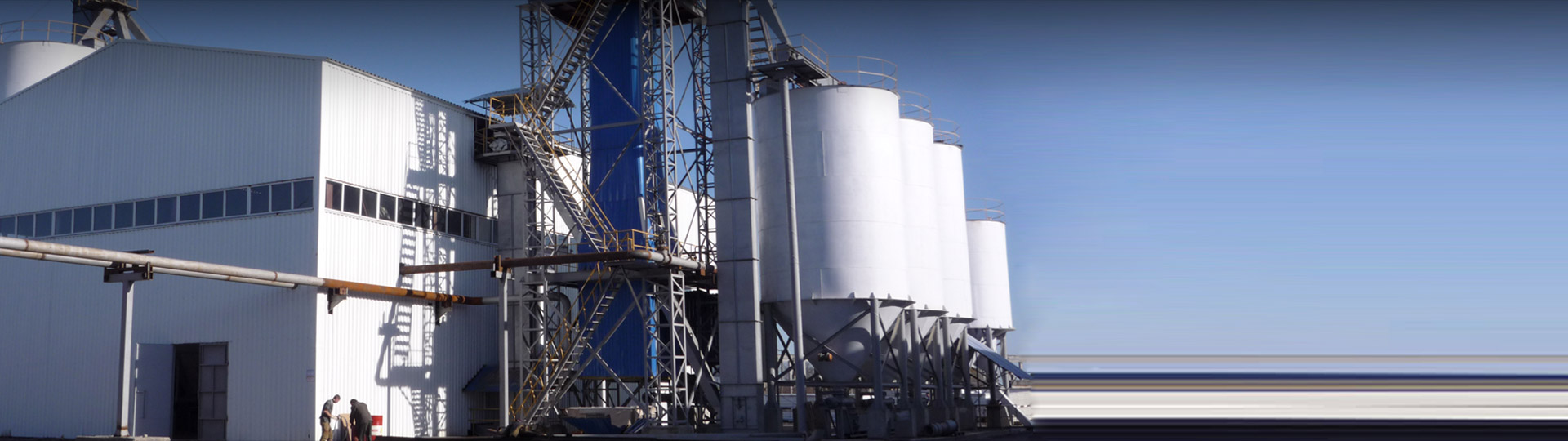
Dried and classified gypsum powder is conveyed to storage silos.
Aeration systems prevent material bridging.
Level sensors maintain stable inventory.
Screw conveyors and pneumatic systems transport powder without contamination.
Silo design supports stable flow during packaging or bulk loading.
Packaging equipment includes:
Valve-type bag fillers
Open-mouth bag filling lines
Bulk tanker loading systems
Automated weighing ensures accuracy. Palletizing and wrapping equipment prepare products for transport.
The gypsum powder manufacturing process benefits from integrated automation systems:
PLC and SCADA platforms control grinding, calcination, airflow, temperature, and material flow.
Online sensors measure moisture, fineness, and temperature.
Laboratory tests verify setting time, purity, particle distribution, and chemical composition.
Hengshui Decheng Machinery & Equipment Co.,Ltd configures its lines with robust control systems to maintain consistent production standards.
Manufacturing facilities use:
Dust collection filters
Noise-reduction systems
Wastewater treatment units
Sealed conveying systems
Compliance with environmental regulations ensures safe and sustainable operation.
Gypsum powder manufacturing involves a structured sequence of crushing, grinding, calcination, cooling, classification, storage, and packaging. Each stage directly affects the final product’s consistency, reactivity, and performance. With comprehensive engineering experience, Hengshui Decheng Machinery & Equipment Co.,Ltd provides production lines tailored for manufacturers seeking efficient operation, stable quality, and reliable long-term performance.
Processing Demand Survey
x