Your Choice of Product
Gypsum plant installation and commissioning typically runs four to six months on site for a board production line, covering mechanical erection, electrical connection, cold and hot testing, and the performance run that ends in handover. The schedule is governed less by the equipment than by site readiness — foundation, power, fuel, water and local labour. A line that is fully prepared can be commissioned in the lower half of that range; one that is not will stretch well beyond it.
This article sets out what the scope includes and excludes, how the schedule is built, what the buyer must have ready, and how acceptance is measured.
The scope is normally drawn along a clean boundary: equipment from the supplier, civil works from the buyer.
Included in the supplier's scope: supervision of mechanical erection and alignment; electrical and control wiring, cabinet installation and instrument calibration; cold commissioning, meaning the dry running of every drive, conveyor and interlock; hot commissioning, from first firing of the dryer to first board; process tuning to the agreed product specification; operator and maintenance training; and the performance test with handover documentation.
Normally by the buyer: factory building, foundations and equipment bases; power supply to the plant incomer, transformers and cabling to the control room; fuel supply at the required pressure and calorific value; water, compressed air and drainage; raw material at the plant boundary; local labour, scaffolding and lifting equipment; and accommodation, transport and permits for the commissioning team.
Foundation drawings and equipment base condition drawings are issued by the supplier, but the civil construction itself is carried out locally. This split matters because a delayed foundation is the most common single cause of a delayed commissioning — the equipment can be on site and still not start.
The four to six month figure is not one continuous activity. It breaks down roughly as follows.
Phase | Typical duration | What happens |
Site preparation and foundation | Before arrival | Civil works, base plates, anchor bolts set |
Mechanical erection | 6–10 weeks | Structure, dryer, forming section, conveyors, silos |
Electrical and control | 4–8 weeks, overlapping | Cabinets, cabling, instruments, PLC download |
Cold commissioning | 1–2 weeks | Every drive run empty, interlocks proven |
Hot commissioning | 2–4 weeks | Dryer firing, first board, parameter setting |
Performance run | 1–2 weeks | Continuous operation at rated output |
Two factors genuinely compress the schedule: erecting mechanically and electrically in parallel, and running cold commissioning section by section rather than waiting for the whole line. One does not: rushing hot commissioning. The dryer needs time to reach thermal equilibrium, and board quality in the first days is not representative of steady state.
A powder line alone is faster on site than a board line, since there is no forming machine, setting belt or multi-deck dryer to align. On a combined plant, the powder line is normally commissioned first so that it can supply stucco to the board line, rather than the board line being tuned on bought-in material.
This list determines whether the schedule holds. Each item has stopped a project at some point.
Item | Requirement |
Foundation and base plates | Cured, surveyed, anchor bolts to drawing tolerance |
Building envelope | Roof and walls closed at least over the dryer and forming area |
Power | Incomer energised, transformer capacity confirmed, voltage and frequency checked on load |
Fuel | Available at the specified pressure and calorific value, with a test certificate |
Water | Supply connected, quality checked — hardness affects slurry behaviour and product consistency |
Compressed air | Dry, oil-free, at the required flow and pressure |
Raw material | Stucco or gypsum rock on site, analysed, sufficient for the performance run |
Labour | Agreed number of local helpers, plus riggers and electricians if contracted locally |
Accommodation and transport | Arranged before arrival, not on arrival |
The fuel specification deserves particular attention. A burner set for natural gas at a stated calorific value will not perform to guarantee on a different gas, or on heavy oil, without re-jetting and re-tuning. If the fuel source is not confirmed before shipment, commissioning becomes the point at which the problem is discovered — the most expensive possible moment.
Commissioning ends with a performance run, measured against figures agreed in the contract rather than against impression. The usual measurements are continuous operation at rated line speed for a specified period; output in square metres per hour at the reference board thickness; thickness tolerance and edge quality; density and flexural strength against the product standard; specific energy consumption in kWh per square metre; and dryer temperature profile stability across the deck.
Where a performance figure cannot be met because the raw material differs from the agreed analysis, the guarantee is normally assessed against the agreed analysis rather than the material actually supplied. This is why the raw material analysis is requested at enquiry stage and not after shipment.
Training runs alongside commissioning rather than after it, because operators learn the line while it is being proven. It normally covers three groups: line operators on start-up, running and shutdown sequences; maintenance staff on mechanical and electrical servicing; and laboratory staff on the quality tests. The objective is that the buyer's team can run the line without the supplier's engineers present, which is also the point at which the warranty period becomes meaningful.
Kyrgyzstan — 10 million m²/year board line, turnkey, in production. Scope covered process design, equipment manufacture, shipment, installation, commissioning and operator training, on a greenfield site. The line has since been expanded with additional capacity at the same location. The point this case illustrates is the acceptance path: commissioning ran from cold testing through to a performance run measured against the agreed product specification, and handover followed only after that run was met.
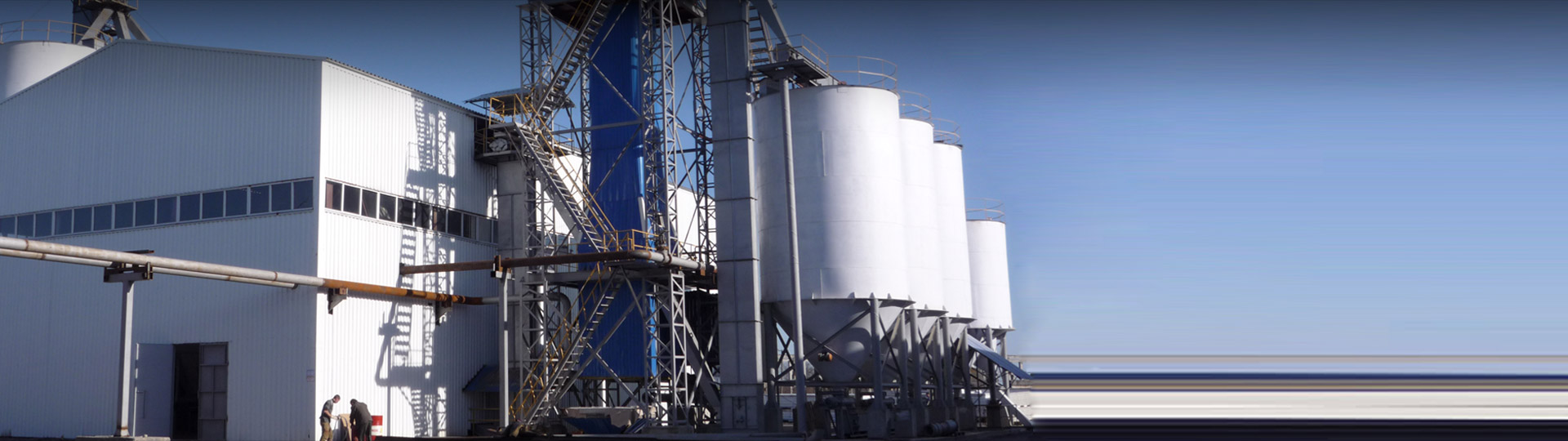
Ghana — 100,000 t/year gypsum powder line, currently in installation. Steel structure erected, equipment being positioned, silos and bucket elevators already in place. This is the phase where site readiness decides everything: the equipment is on site, and progress depends on foundation completion, power availability and the local labour supply.
Four factors move both the schedule and the cost of installation. The number of lines: a second line does not double the on-site period, but it adds scope to every phase. Site conditions: a location with unreliable power adds generator capacity, voltage stabilisation and a longer electrical phase. Local labour capability: where local riggers and electricians are experienced, supervision load drops; where they are not, the supplier's team does more and stays longer. And distance: clearance, inland transport and local spare parts availability all affect how quickly problems are resolved during commissioning.
How long does installation and commissioning take?
Four to six months on site for a board line, measured from the arrival of the first equipment. Powder lines are shorter. The figure assumes the site is ready when the team arrives.
Can installation start before the building is finished?
Partly. Mechanical erection can begin once foundations are cured and the roof over the erection area is closed. The dryer and forming section need the building envelope before hot commissioning, not before erection.
Who supplies the installation engineers?
The supplier sends its own mechanical, electrical and process engineers. Local labour is supplied by the buyer, and the ratio of supplier engineers to local workers is agreed before mobilisation.
When does the warranty start?
From successful commissioning and acceptance, not from the contract date or the shipment date. This is worth writing explicitly into the contract, since the two can be many months apart.
What happens if the local power supply is unstable?
Voltage and frequency must be confirmed before the electrical design is frozen. Where supply is unreliable, the line is designed with additional protection, and the buyer may need to provide a generator or stabiliser. This is decided at engineering stage, not on site.
Send us your target capacity, block size and available fuel, and our engineering team will return a tailored configuration and quotation. Hengshui Decheng Machinery & Equipment Co., Ltd. (DCI) — Email: dci@chinagypsummachine.com | WhatsApp: +86 13930110827 / +86 18203235588
| www.dcimachine.com
Processing Demand Survey
x