Your Choice of Product
The gypsum board manufacturing process transforms calcined gypsum powder (calcium sulfate hemihydrate) into a rigid, paper-faced board used for interior walls and ceilings. This process combines chemistry, mechanical forming, and thermal drying. Understanding each step allows plant managers to optimize production parameters, reduce waste, and achieve consistent board properties. This article describes the complete process flow, from raw material preparation to final stacking, with technical insights into critical control points. The equipment and process knowledge presented are based on standard industry practice, with reference to systems supplied by Hengshui Decheng Machinery & Equipment Co.,Ltd.
The gypsum board manufacturing process consists of seven main stages:
Raw material preparation and dosing
Slurry mixing
Forming between paper liners
Setting (hydration) on a conveyor
Cutting to length
Drying in a multi-deck kiln
Finishing, stacking, and curing
Each stage is interdependent. A variation in slurry water content, for example, affects setting time, which then impacts cutting and drying. Process control relies on continuous measurement and feedback.
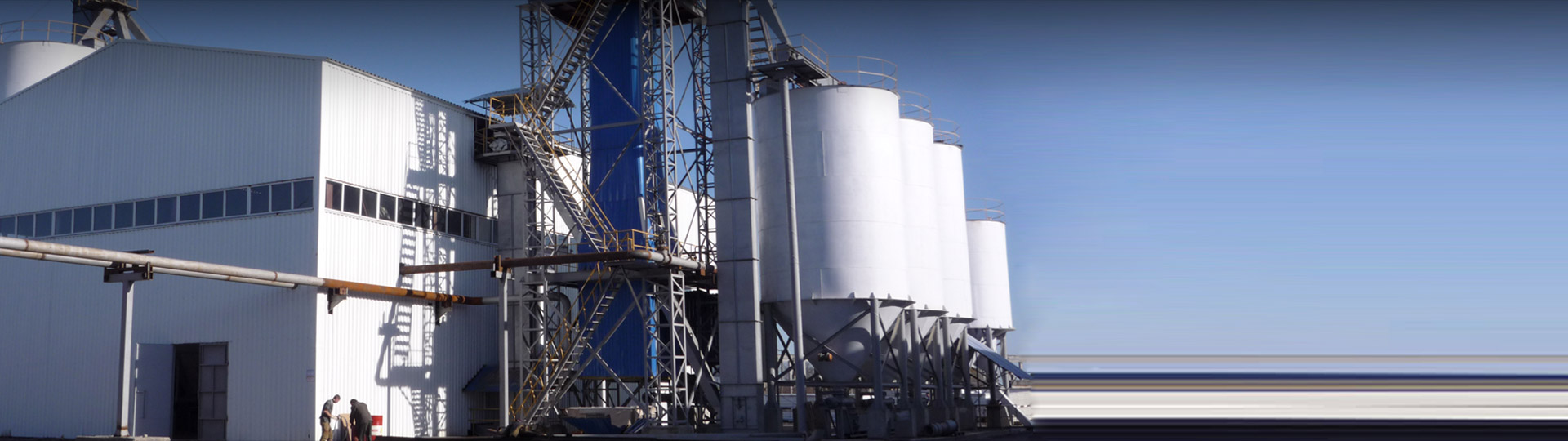
Gypsum powder (stucco) is stored in a weatherproof silo. From the silo, a screw conveyor or pneumatic transport system moves the powder to a day bin above the mixer. Additives are also prepared at this stage:
Starch (for paper adhesion): dissolved in water.
Retarder (to slow setting): typically protein-based, dosed at 0.05–0.2% of powder weight.
Foam (to reduce density): generated by a foam generator using surfactant and compressed air.
Water (to initiate hydration): temperature controlled to 20–30°C for consistent setting.
The heart of the gypsum board manufacturing process is the continuous pin mixer. Gypsum powder, water, and additives enter the mixer simultaneously. The rotor spins at 300–600 rpm, creating a homogeneous slurry in 10–20 seconds. Key parameters:
Water-to-plaster ratio: 0.6–0.8 (by weight). Lower ratio gives higher strength but reduced workability.
Slurry temperature: rises due to exothermic hydration; typically 35–45°C exiting the mixer.
Density: target 600–900 kg/m³ for standard boards (lower for lightweight).
The mixed slurry exits through a gate or hose onto the lower paper liner.
The slurry is spread onto a moving lower paper liner. Immediately after, an upper paper liner is applied. The sandwich passes through a forming table, which shapes the board to the correct thickness and width. The forming table includes:
Vibrating roller: removes air bubbles and improves density uniformity.
Edge formers: fold the paper edges over the slurry and apply glue to seal the sides.
Thickness gauges: non-contact sensors that provide feedback to adjust the forming gap.
The board’s final thickness (typically 9 mm, 12 mm, or 15 mm) is set by the gap between the forming table’s upper and lower belts or rollers.
After forming, the wet board enters a long setting conveyor. During this stage, the hemihydrate (CaSO₄·½H₂O) reacts with water to form dihydrate (CaSO₄·2H₂O) crystals. This reaction releases heat and causes the board to harden. The setting conveyor must be long enough to allow complete hydration before cutting. Typical conveyor lengths:
| Line speed (m/min) | Minimum setting conveyor length (m) |
|---|---|
| 3 | 25 |
| 6 | 45 |
| 10 | 70 |
| 15 | 100 |
The conveyor may be of belt type (for lower speeds) or roller type (for higher speeds). Roller conveyors reduce friction and allow easier cleaning.
Once the board has hardened sufficiently (after approximately 5–10 minutes, depending on retarder dosage), it is cut into individual panels. A synchronized cutting knife moves with the board during the cut, then returns. The cutting mechanism can be:
Flying knife (shear type): two blades that close like scissors.
Rotary knife: circular blades that rotate against each other.
Cut length is adjustable from 1.8 m to 4 m. After cutting, an edge trimmer removes rough paper and excess gypsum from the long edges, creating a clean, square edge.
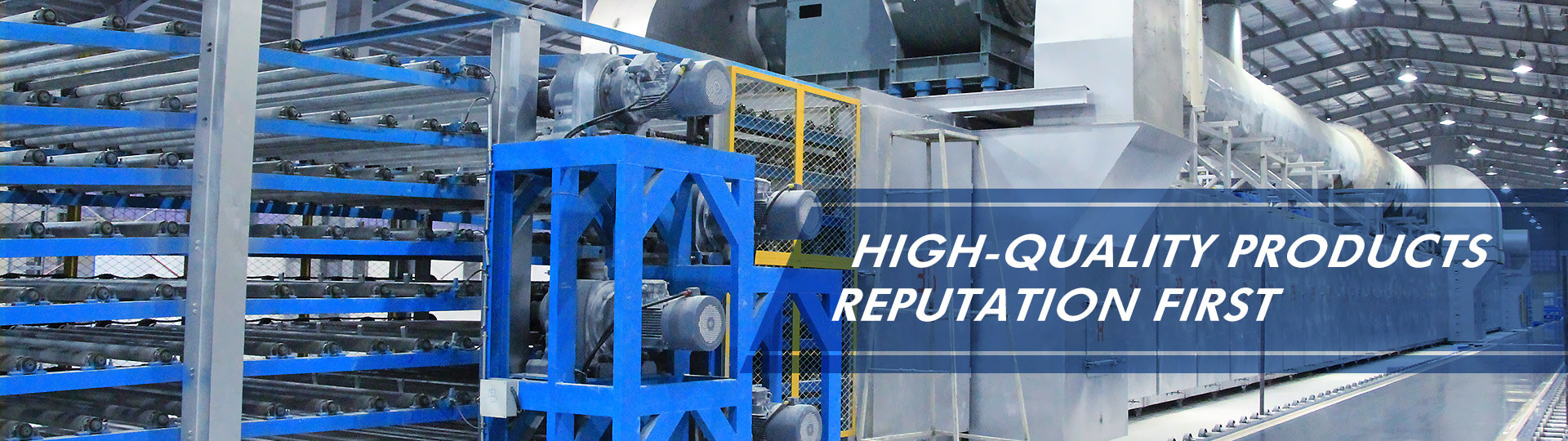
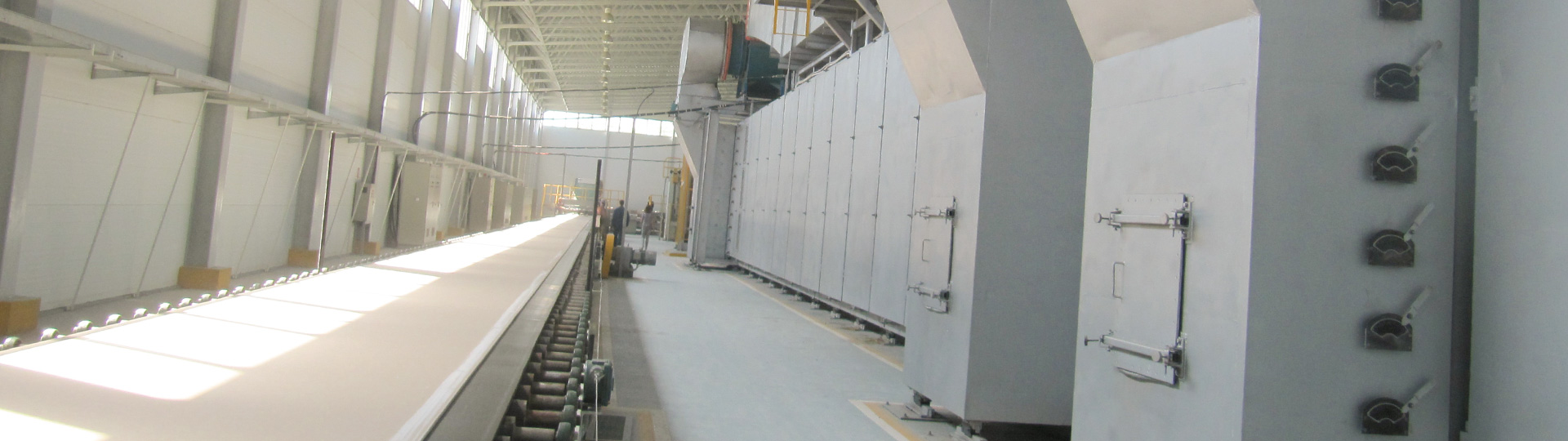
The cut boards still contain free water (approximately 15–25% by weight). They must be dried to a final moisture content of less than 1% to prevent mold and ensure strength. The gypsum board manufacturing process uses a multi-deck roller dryer. Boards enter one deck, travel the length of the dryer, then drop to the next deck. Hot air circulates across the boards.
Dryer operating conditions:
Temperature profile: 180–220°C at the inlet, decreasing to 80–100°C at the outlet.
Residence time: 40–90 minutes depending on board thickness and dryer design.
Fuel types: natural gas, diesel, biomass (wood chips, agricultural waste), or coal.
A typical 12-deck dryer for a 10 million m²/year line consumes 5–8 million kcal per hour. Heat recovery systems can reduce fuel use by 15–20%.
After drying, boards are cooled in a cooling section (forced air). Then they pass through an edge grinder to remove any burrs. The boards are automatically stacked into packs (typically 50–100 boards per stack). Stacking can be done by a suction-type or mechanical arm stacker.
Finally, the stacks are stored for curing. Curing allows residual moisture to equalize and the board to reach full strength. A minimum curing time of 24–48 hours is recommended before shipping.
| Board Type | Thickness (mm) | Water/Plaster Ratio | Dryer Temp (°C) | Drying Time (min) | Density (kg/m³) |
|---|---|---|---|---|---|
| Standard | 9.5 | 0.70 – 0.75 | 190 – 210 | 45 – 55 | 750 – 800 |
| Standard | 12.5 | 0.70 – 0.75 | 190 – 210 | 60 – 75 | 750 – 800 |
| Lightweight | 12.5 | 0.75 – 0.80 | 180 – 200 | 55 – 70 | 600 – 650 |
| Fire-resistant | 12.5 | 0.65 – 0.70 | 200 – 220 | 70 – 90 | 850 – 900 |
To maintain product quality, the gypsum board manufacturing process requires real-time monitoring at several control points:
Slurry spread width: Must be consistent to avoid exposed paper edges.
Setting time test: Every 30 minutes, a sample is taken to measure initial and final set. Target: initial set 6–10 min, final set 12–20 min.
Board moisture after dryer: In-line moisture meters (microwave or capacitance type) ensure <1% before stacking.
Board strength: Periodic bending tests (three-point loading) according to ASTM C473 or equivalent standards.
Q1: How does the gypsum board manufacturing process differ for fire-resistant boards?
Fire-resistant boards contain additives such as glass fibers and vermiculite. The mixing process must ensure even dispersion of these fibers. The water-to-plaster ratio is slightly lower (0.65–0.70) to achieve higher density. Drying temperatures are higher and residence times longer to remove core moisture without damaging additives.
Q2: What is the role of foam in the process?
Foam is added to the slurry to create air bubbles, reducing board density and weight. The foam generator produces a stable foam with bubble sizes of 0.5–1.5 mm. Too much foam reduces strength; too little makes the board heavy. Typical foam addition: 0.5–2% of slurry volume.
Q3: Can the process use synthetic gypsum from power plants?
Yes. Synthetic gypsum (from flue gas desulfurization) has higher purity (95%+) than natural gypsum. However, it may contain higher free moisture (10–15%) and requires pre-drying before calcination. The board manufacturing process itself is identical once calcined powder is obtained.
Q4: How is waste material recycled in the process?
Wet edge trimmings and cut-offs can be returned to the mixer as “recycle material” (up to 5% of powder weight). Dry waste from the finishing section is ground and added back to the powder silo. However, excessive recycling can affect setting time and strength.
Q5: What training is required to operate the process?
Operators need training in:
Mixer startup and shutdown sequences
Setting time adjustments using retarder dosage
Dryer temperature control
Quality testing (moisture, strength, thickness)
Basic troubleshooting of paper breaks or slurry blockages
Hengshui Decheng Machinery & Equipment Co.,Ltd. includes a training program with each line, covering both classroom theory and hands-on practice.
The gypsum board manufacturing process is a carefully balanced sequence of chemical reaction, mechanical forming, and thermal treatment. Each stage, from mixing to drying, must be controlled within narrow tolerances to produce boards that meet industry standards for strength, flatness, and fire resistance. By understanding the process parameters and control points outlined in this article, plant operators can improve efficiency and reduce defects. Hengshui Decheng Machinery & Equipment Co.,Ltd. supplies complete production lines with detailed process documentation, enabling investors to start production with confidence. For those also sourcing powder, the same company offers integrated solutions covering both upstream grinding and downstream board manufacturing.
Processing Demand Survey
x