Your Choice of Product
The construction industry in Zimbabwe has experienced steady growth, driving demand for modern building materials such as gypsum boards. Establishing a local manufacturing facility requires a reliable Gypsum Board Production Line Zimbabwe can operate efficiently under regional conditions. This article provides a detailed technical overview of the equipment, process stages, and practical considerations for setting up a production line in Zimbabwe. The information is based on standard industrial practices and equipment supplied by Hengshui Decheng Machinery & Equipment Co.,Ltd., focusing on functionality and long-term reliability.
A gypsum board production line converts gypsum powder, paper, and additives into finished plasterboards. The core process includes:
Mixing gypsum powder with water and additives to form a slurry.
Spreading the slurry between two layers of paper (face and back).
Forming a continuous wet board on a forming table.
Setting the board on a long conveyor belt.
Cutting to length.
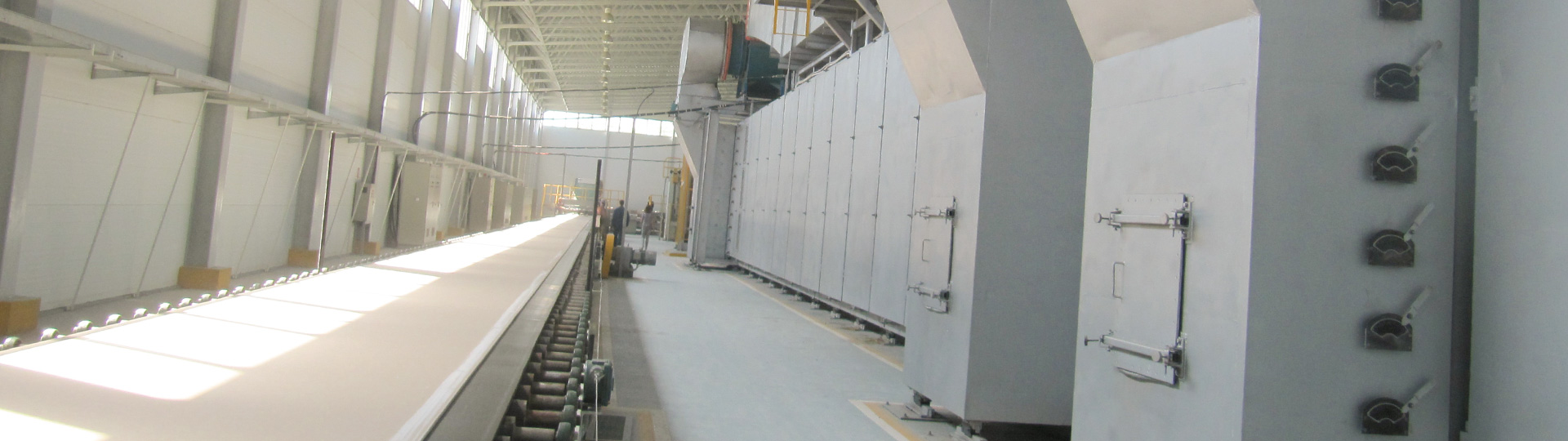
Drying in a multi-deck dryer.
Trimming, stacking, and packaging.
For a Gypsum Board Production Line Zimbabwe, the line capacity typically ranges from 2 million to 20 million square meters per year, depending on investment scale.
The following table lists the major machinery units and their functions in a standard production line.
| Equipment Component | Function | Typical Specifications |
|---|---|---|
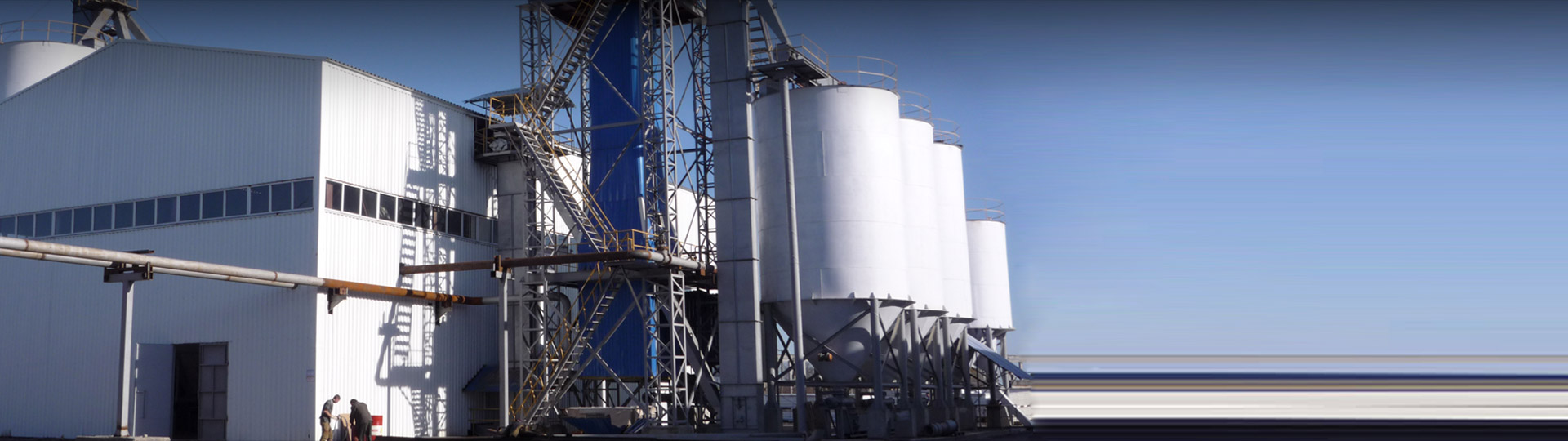
| Raw material silos | Store calcined gypsum powder and starch | Capacity: 50–200 tons each |
| Additive dosing system | Precisely feed retarders, binders, and foam | Digital loss-in-weight feeders |
| Starch mixer | Prepare liquid starch for paper bonding | Stainless steel, 500–2000 L |
| Continuous mixer (pin mixer) | Blend gypsum powder, water, and foam into slurry | Rotor speed 300–600 rpm |
| Forming table with rollers | Shape wet board between paper layers | Width: 600–1200 mm |
| Setting conveyor | Allow initial hydration and hardening | Length: 60–150 m |
| Flying cut-off knife | Cut wet board into predetermined lengths | Accuracy: ±2 mm |
| Roller conveyor for accelerator | Speed up setting reaction | Optional with spray unit |
| Multi-deck dryer | Remove free water from boards | 8–16 decks, 150–250°C |
| Cooler and trim saw | Cool boards and cut edges to final width | Dust extraction included |
| Stacker and packer | Stack finished boards and wrap for shipping | Automatic pallet changer |
A complete Gypsum Board Production Line Zimbabwe must include all these components, with attention to local power supply stability (220/380V, 50Hz).
3.1 Power Fluctuation Management
Zimbabwe experiences occasional grid voltage variations. Therefore, the line should be equipped with:
Soft starters for all motors above 15 kW.
Variable frequency drives (VFDs) on the pin mixer, dryer fans, and conveyor drives.
A voltage stabilization system for control panel PLC.
3.2 Water Quality
Gypsum board production requires clean water with controlled pH (6.5–7.5). In many parts of Zimbabwe, borehole water may contain high total dissolved solids (TDS). A water treatment unit (reverse osmosis or ion exchange) is recommended before water enters the starch mixer and slurry mixer. Hard water can retard setting time and reduce board strength.
3.3 Raw Material Supply
Zimbabwe has natural gypsum deposits in areas such as Manicaland and Mashonaland. For a Gypsum Board Production Line Zimbabwe, either natural gypsum or synthetic gypsum (from phosphate or desulfurization processes) can be used. However, natural gypsum requires additional crushing and grinding equipment upstream. A combined gypsum powder production line can feed the board line directly, improving cost efficiency.
3.4 Climate Considerations
High temperatures during summer (up to 40°C) accelerate the setting reaction. The setting conveyor length may need to be extended by 10–15%, or a cooling system should be installed on the forming table. Conversely, during humid rainy seasons, the drying kiln requires higher air exchange rates to remove moisture.
Proper installation of a Gypsum Board Production Line Zimbabwe follows these phases:
Phase 1 – Foundation and Civil Work
Concrete slab thickness: 300 mm minimum for heavy equipment.
Anchor bolts embedded according to machine layout drawings.
Vibration isolation pads under the pin mixer and dryer.
Phase 2 – Mechanical Assembly
Position forming table first, as it is the reference point.
Align setting conveyor with forming table using laser alignment tools (tolerance ±0.5 mm/meter).
Install dryer in sections, ensuring thermal expansion gaps.
Phase 3 – Electrical and Control
Run power cables in separate trays from signal cables (to avoid interference).
Ground all equipment to a common earth busbar.
Program the PLC with Zimbabwe-specific parameters (e.g., slower start-up curve for voltage dips).
Phase 4 – Calibration and Dry Run
Calibrate additive feeders with actual materials.
Run the entire line without gypsum for 4 hours, checking belt tracking and knife action.
Perform a wet test with small batches to verify board thickness (common target: 9.5 mm, 12.5 mm).
| Problem | Likely Cause | Solution |
|---|---|---|
| Board cracking after cutter | High slurry viscosity or low paper tension | Reduce water-to-gypsum ratio; adjust paper brake |
| Uneven board thickness | Worn forming table rollers or misaligned knife | Recalibrate roller gaps; check knife guide rails |
| Dried board has soft edges | Insufficient drying temperature or air flow | Clean dryer ducts; increase temperature by 5–10°C |
| Paper delamination | Low starch adhesive temperature | Preheat starch mixer to 40–50°C |
| Frequent power trips | Overloaded motors or VFD harmonics | Install line reactors; reduce line speed temporarily |
Q1: What is the minimum factory size required for a Gypsum Board Production Line Zimbabwe?
A: For a 5 million m²/year line, a building area of 2,500 m² (production hall) plus 1,000 m² (raw material storage) and 1,500 m² (finished goods warehouse) is typical.
Q2: Can the same line produce both standard and fire-resistant boards?
A: Yes, by adding vermiculite and glass fiber dosing systems upstream of the pin mixer. This requires an extra hopper and feeder.
Q3: How many operators are needed per shift?
A: A fully automated line requires 4–6 operators: one at forming, one at cutter, one at dryer control, two at stacking/packing, and one supervisor.
Q4: What is the expected lifespan of key wear parts?
A: Pin mixer blades: 3–6 months (depending on abrasive content). Conveyor belts: 2–3 years. Dryer chains: 5–7 years with regular lubrication.
Q5: Does Hengshui Decheng Machinery & Equipment Co.,Ltd. provide on-site training in Zimbabwe?
A: Yes, the company offers commissioning engineers who stay for 4–6 weeks to train local staff on operation and maintenance.
Investing in a Gypsum Board Production Line Zimbabwe reduces reliance on imported boards from South Africa and China. Local production lowers transportation costs and creates jobs. With proper equipment, the break-even period is typically 3–5 years at 70% capacity utilization. The line should be designed for future expansion – adding a second dryer or a faster cutter can double output without replacing the entire line.
Establishing a gypsum board factory in Zimbabwe requires careful selection of machinery that can handle local power, water, and climate conditions. The technical insights provided above aim to help investors and plant managers make informed decisions. Hengshui Decheng Machinery & Equipment Co.,Ltd. supplies complete production lines with installation supervision and training. By following the recommended practices, a Gypsum Board Production Line Zimbabwe can achieve consistent board quality and operational reliability for decades.
Processing Demand Survey
x